
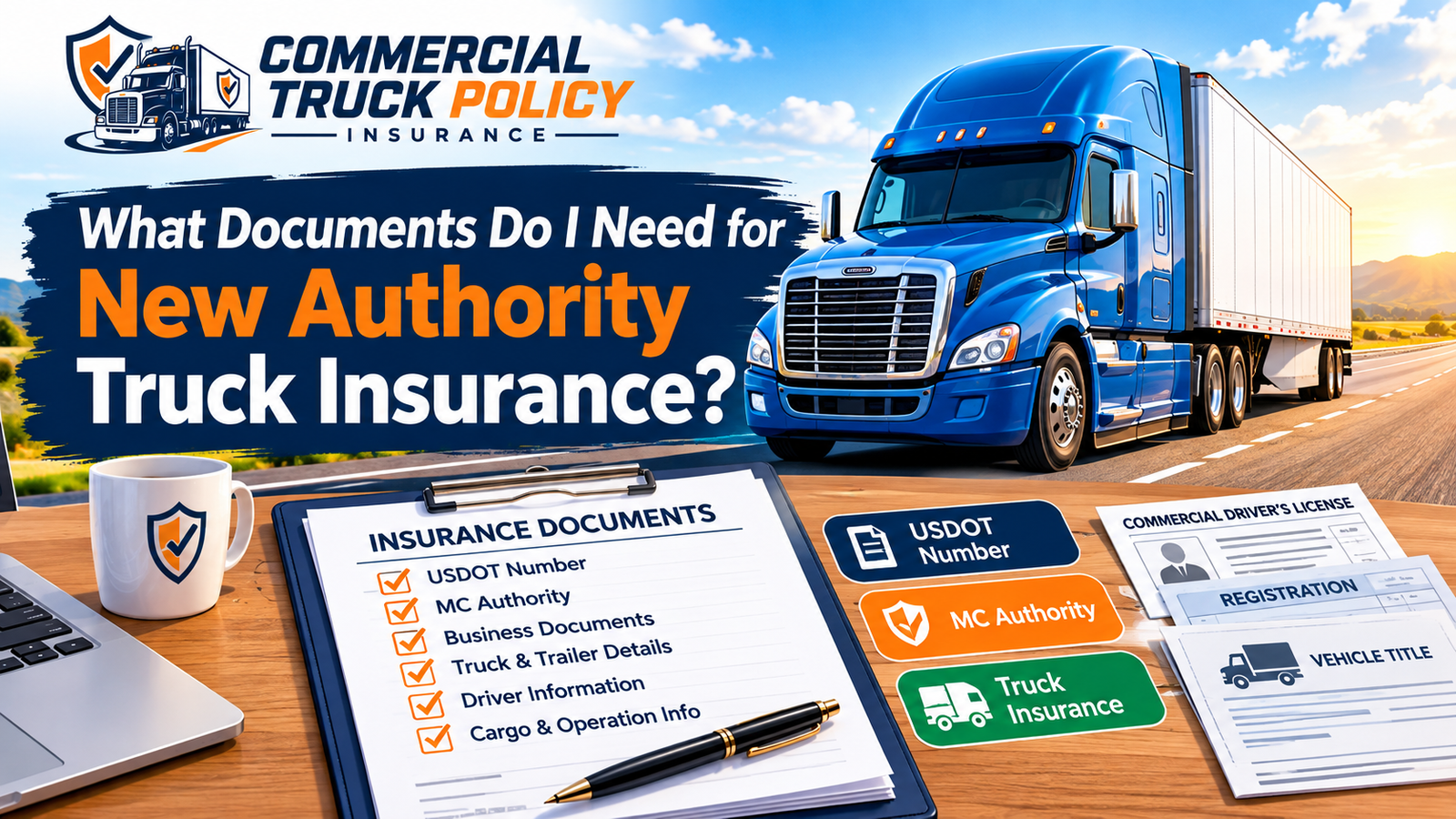
What Documents Do I Need for New Authority Truck Insurance? (Complete Checklist)
Starting your own trucking company and applying for a new motor carrier authority is a massive milestone. But before you can legally hit the highway and haul your first load, you need to secure the right commercial truck insurance policy.
One of the most common questions new trucking business owners ask is: “What documents do I need to get new authority truck insurance?”
Insurance companies don’t just hand out commercial policies; they underwrite risk carefully—especially for “new ventures” (new authorities). Having your paperwork ready before you call an agent will save you weeks of delays, prevent rejected filings, and help you get much more accurate quotes.
Here is a straightforward, complete checklist of the documents and information you need to prepare.
1. USDOT Number and MC Authority Information
Insurance underwriters need to verify your official federal registration before they can issue a policy or submit mandatory filings.
- USDOT Number: Identifies your motor carrier registration.
- MC / FF Number: Your operating authority application details.
- Legal Business Name & Address: Crucial Tip: Your business name and address on your insurance application must match letter-for-letter with your FMCSA registration records. Even a tiny mismatch (like “LLC” vs. “Inc.” or a different street suffix) can stall your authority activation.
Note: If you are still in the process of applying for your MC number, let your agent know immediately so they can coordinate the timing of your insurance binder and electronic filings.
2. Business Registration and Legal Documents
Insignias want proof that your business is legally established. Depending on your business structure, prepare:
- Articles of Incorporation (for Corporations) or LLC Formation Documents.
- Employer Identification Number (EIN) issued by the IRS.
- Proof of Principal Place of Business (Utility bill, lease agreement, or official business address).
3. Truck Registration and Vehicle Details
Your commercial vehicle is your biggest asset. Insurers need precise vehicle data to calculate your physical damage and liability rates:
- Vehicle Identification Number (VIN): (Double-check this; a single wrong digit delays everything).
- Year, Make, and Model of the tractor.
- Gross Vehicle Weight Rating (GVWR).
- Title, Bill of Sale, or Lease/Financing Agreement: If you are financing or leasing the truck, your lender will be listed as a Loss Payee, and you will be contractually required to carry Physical Damage (Collision and Comprehensive) coverage.
4. Commercial Driver’s License (CDL) & Driver Information
For a new trucking business, underwriters look closely at the driver’s background because the company has no safety history yet. Prepare:
- CDL Number and State of Issuance for every driver.
- 3-to-5 Year Employment/Driving History.
- Motor Vehicle Record (MVR): Some insurers pull this directly, but disclosing violations upfront prevents policy cancellations later.
⚠️ Warning: Never hide a speeding ticket, accident, or violation on your application. If an insurer discovers an undisclosed driver or violation during a claim investigation, they can deny coverage entirely (rescind the policy).
5. Previous Insurance History & Loss Runs (If Applicable)
Even though your authority is brand new, you may have previous driving experience as a company driver or owner-operator under someone else’s authority.
- Prior Insurance Declarations Page: Proof of past commercial driving.
- Loss Runs Report: A document from your previous insurance carrier proving your claims history (or lack thereof). Clean loss runs can secure you a significantly lower “new venture” rate.
6. Operational Details: Cargo, Radius, and Mileage
Insurance pricing changes drastically based on what you haul and where you drive. Be ready to give clear, realistic details about your operation:
- Commodity Hauled: General freight, dry van, reefer, flatbed, or hazardous materials (hazmat).
- Operating Radius: Local (under 50 miles), regional, or long-haul Over-the-Road (OTR).
- Estimated Annual Mileage: Don’t drastically understate your miles to save money; inaccurate figures can trigger an audit or claim disputes.
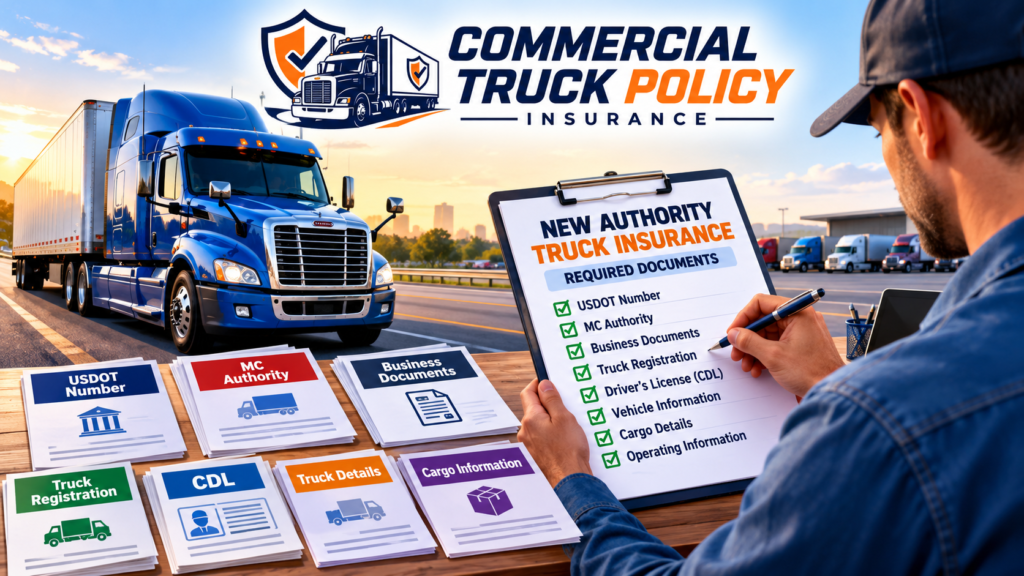
Summary Checklist: Documents to Gather Before Calling an Agent
| Document / Information | Why Insurance Companies Need It |
| USDOT & MC Number | Verifies your federal motor carrier identity |
| Business Formation Papers | Proves legal entity status (LLC/Corp) & EIN |
| Truck VIN & Registration | Determines vehicle underwriting & physical damage value |
| CDL & Driver Details | Evaluates driver risk profile and experience |
| Loss Runs / Prior Policy | Establishes safety record for potential discounts |
| Cargo Description | Dictates cargo insurance and liability limits |
Essential Coverages Every New Authority Needs
Once you have your documents ready, make sure you understand the core policies you will likely need to purchase:
- Primary Auto Liability Insurance: Legally required by the FMCSA (typically $750,000 to $1M minimum) to cover bodily injury or property damage you cause to others.
- Motor Truck Cargo Insurance: Protects the freight you are hauling. Even if not federally mandated for every commodity, brokers and shippers will require a $100,000 cargo policy before giving you a load.
- Physical Damage Insurance: Covers your own truck against accidents, theft, or fire (mandatory if you have a bank loan).
Frequently Asked Questions (FAQs)
1. Can I get truck insurance before my MC authority is active?
Yes. In fact, you must secure your policy and have your insurer file your proof of insurance (like the BMC-91X form) with the FMCSA before your authority status changes from “Pending” to “Active.”
2. Why is new authority truck insurance so expensive?
Insurance companies view new trucking businesses as higher risk because there is no established safety record. Maintaining a clean driving record, choosing a higher deductible, and starting with one truck can help manage these initial costs.
3. Do I file the insurance forms with the FMCSA myself?
No. Your insurance company or authorized filing agent must electronically submit your proof of insurance (such as Form BMC-91 or BMC-91X) directly to the FMCSA. You cannot file these forms yourself.ing your specific circumstances.
Can a New Trucking Company Get Monthly Insurance Payments?
How Long Does It Take to Get Truck Insurance After Getting MC Number?