
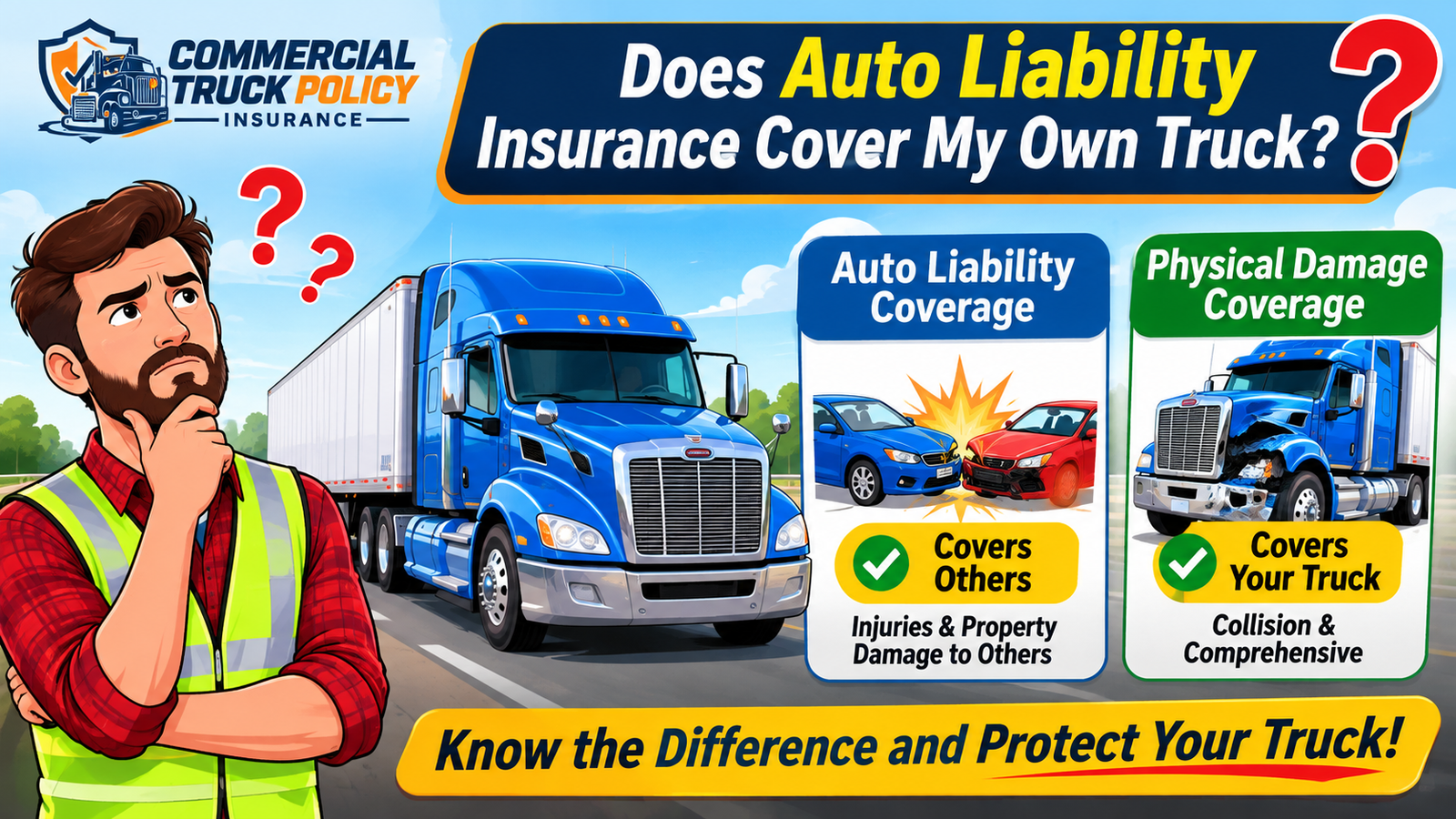
When starting a commercial trucking business or purchasing your first semi-truck, securing the right insurance program is one of your most critical financial decisions. Whether you operate a Class 8 tractor-trailer, box truck, or specialized rig, highway risks are present every mile you drive.
A dangerous misconception among many new owner-operators is believing that purchasing a mandatory $1,000,000 Primary Auto Liability policy means their own truck is fully protected if a crash occurs.
The reality: Primary Auto Liability does not pay a single dollar to repair or replace your own truck.
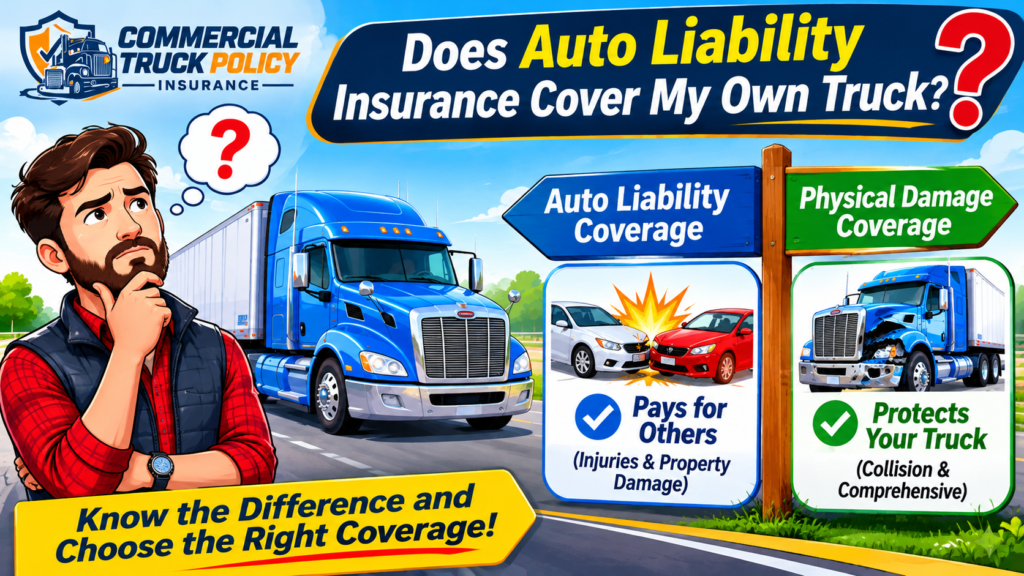
Commercial auto liability is strictly third-party coverage designed to pay for injuries, medical expenses, and property damage caused to other people. To financially protect your own tractor and trailer, you must carry Physical Damage Insurance (Collision and Comprehensive). Here is a practical breakdown of how Primary Auto Liability works, why it excludes your rig, and how to structure complete equipment protection in 2026.
Quick Summary: Auto Liability vs. Physical Damage
| Coverage Type | Target Beneficiary | Pays For Your Truck? | Mandatory Status |
| Primary Auto Liability | Third-party drivers & property | No | Mandatory by FMCSA & Brokers ($1M Limit) |
| Collision Insurance | Your tractor & trailer | Yes | Mandatory by Lenders & Banks if financed |
| Comprehensive Insurance | Your tractor & trailer | Yes | Mandatory by Lenders & Banks if financed |
| Motor Truck Cargo | Shippers & freight owners | No (Freight only) | Mandatory by Freight Brokers ($100k Limit) |
1. What Is Commercial Auto Liability Insurance?
Primary Auto Liability Insurance is the legal bedrock of commercial trucking, mandated by both federal FMCSA financial responsibility regulations (49 CFR Part 387) and freight broker contracts. Its sole purpose is to indemnify third parties if your commercial vehicle causes a collision on a public road.
What Auto Liability Covers (Third-Party Only):
- Bodily Injury: Emergency room visits, surgeries, hospital bills, and rehabilitation costs for drivers or passengers in other vehicles.
- Third-Party Property Damage: Repairs or replacement costs for damaged passenger cars, guardrails, bridges, utility poles, or buildings.
- Legal Defense Costs: Attorney fees, court costs, and legal settlements if your motor carrier is sued following a highway accident.
The Fundamental Rule: Liability insurance pays outward to protect the public from your truck. It never pays inward to repair your own commercial asset.
2. A Real-World Crash Example: The Costly Liability Trap
To understand why relying solely on liability coverage is dangerous for an owner-operator, consider this common highway scenario:
The Incident
An owner-operator driving a semi-truck valued at $80,000 loses traction on a wet interstate ramp and collides with a passenger car, coming to a stop against a concrete barrier.
- Damage to the Passenger Car: $15,000
- Medical Bills for the Other Driver: $25,000
- Damage to the Owner-Operator’s Truck: $35,000
The Insurance Payout Breakdown
- Primary Auto Liability Response: Pays the $40,000 total ($15,000 car repairs + $25,000 medical bills) to the injured third party.
- Owner-Operator’s Truck Repairs ($35,000): $0 Payout. Because the owner-operator carried liability-only coverage without Physical Damage, the $35,000 repair bill must be paid 100% out-of-pocket by the trucking company.
3. What Insurance Coverages Protect Your Truck?
To protect your primary business asset—your tractor and trailer—you must add Physical Damage Coverage to your commercial auto policy schedule. Physical Damage consists of two distinct coverages:
A. Collision Coverage
Collision coverage pays to repair or replace your insured tractor and trailer when it is damaged in a traffic accident, regardless of who was at fault.
- Covered Events: Jackknifes, rollovers, collisions with another vehicle, or hitting roadside structures (guardrails, poles, bridges).
- Payout Calculation: Claims are settled based on eligible repair costs minus your chosen deductible ($1,000, $2,500, or $5,000), up to the Stated Actual Cash Value (ACV) of the equipment.
B. Comprehensive Coverage
Comprehensive coverage protects your commercial truck against non-collision physical losses that occur while parked or in transit.
- Covered Events: Vehicle theft, cab or engine fires, vandalism, severe hail or windstorm damage, falling objects, flood damage, or animal strikes (such as hitting a deer).
4. Is Physical Damage Coverage Required by Law?
- FMCSA Federal Regulations: No. Under 49 CFR Part 387, the FMCSA strictly regulates public liability and financial responsibility. Federal law does not require you to carry physical damage insurance on your own commercial vehicle. (You can verify federal minimum liability rules via the FMCSA Insurance Filing Requirements portal.)
- Lenders & Leasing Companies: Yes. If your semi-truck or trailer is financed or leased, your lienholder will contractually mandate continuous Comprehensive and Collision coverage to protect their financial collateral.
- Paid-Off Rigs: If you own your truck outright with a clean title, carrying Physical Damage is legally optional. However, operating an expensive commercial rig without it exposes your business to total capital loss if a crash, theft, or fire occurs.
5. Practical Checklist Before Choosing Your Policy
- Verify Equipment Valuation: Ensure your Physical Damage policy reflects the true Stated Actual Cash Value (ACV) of your tractor and trailer. Understating value to lower premiums can lead to co-insurance penalties or partial payouts during a total loss claim.
- Select an Affordable Deductible: Choose a deductible ($1,000 or $2,500) that your business cash reserves can comfortably pay out-of-pocket on short notice.
- Do Not Confuse Cargo with Vehicle Protection: Motor Truck Cargo insurance covers customer goods inside your trailer—it provides zero coverage for physical damage to your tractor or trailer structure.
- Bundle Primary Liability and Physical Damage: Securing both coverages under a single A-rated commercial carrier simplifies claims handling and often unlocks multi-coverage package discounts.
Frequently Asked Questions (FAQs)
1. Does Auto Liability insurance cover my truck if another driver hits me? If another driver is 100% at fault, their liability insurance should pay for your truck’s repairs. However, if the at-fault driver is uninsured, underinsured, or disputes fault, you will need your own Collision or Uninsured Motorist Property Damage (UMPD) coverage to repair your rig without waiting months for legal battles to resolve.
2. Can I buy liability-only insurance for a commercial truck? Yes, if you own your truck outright without an active loan or lease. However, doing so means your business assumes 100% of the financial risk for any repairs, theft, fire, or total loss involving your equipment.
3. How does a deductible work on Physical Damage claims? If covered collision repairs total $20,000 and your policy deductible is $2,500, you pay $2,500 directly to the repair facility, and your insurance carrier pays the remaining $17,500.
4. Does Physical Damage insurance cover downtime or lost income while my truck is in the shop? No. Standard Collision and Comprehensive policies only pay for physical repairs to the equipment. If you want reimbursement for lost revenue or rental truck expenses during repairs, you must add a separate Downtime Coverage or Rental Reimbursement endorsement.
Editorial & Regulatory Disclaimer
This guide is researched and published for educational and informational purposes only and does not constitute legal, financial, or licensed insurance advice. Policy terms, deductibles, and exclusions vary by insurance carrier and state jurisdiction. Always verify your policy schedule and consult a licensed commercial transportation insurance agent before binding coverage.