
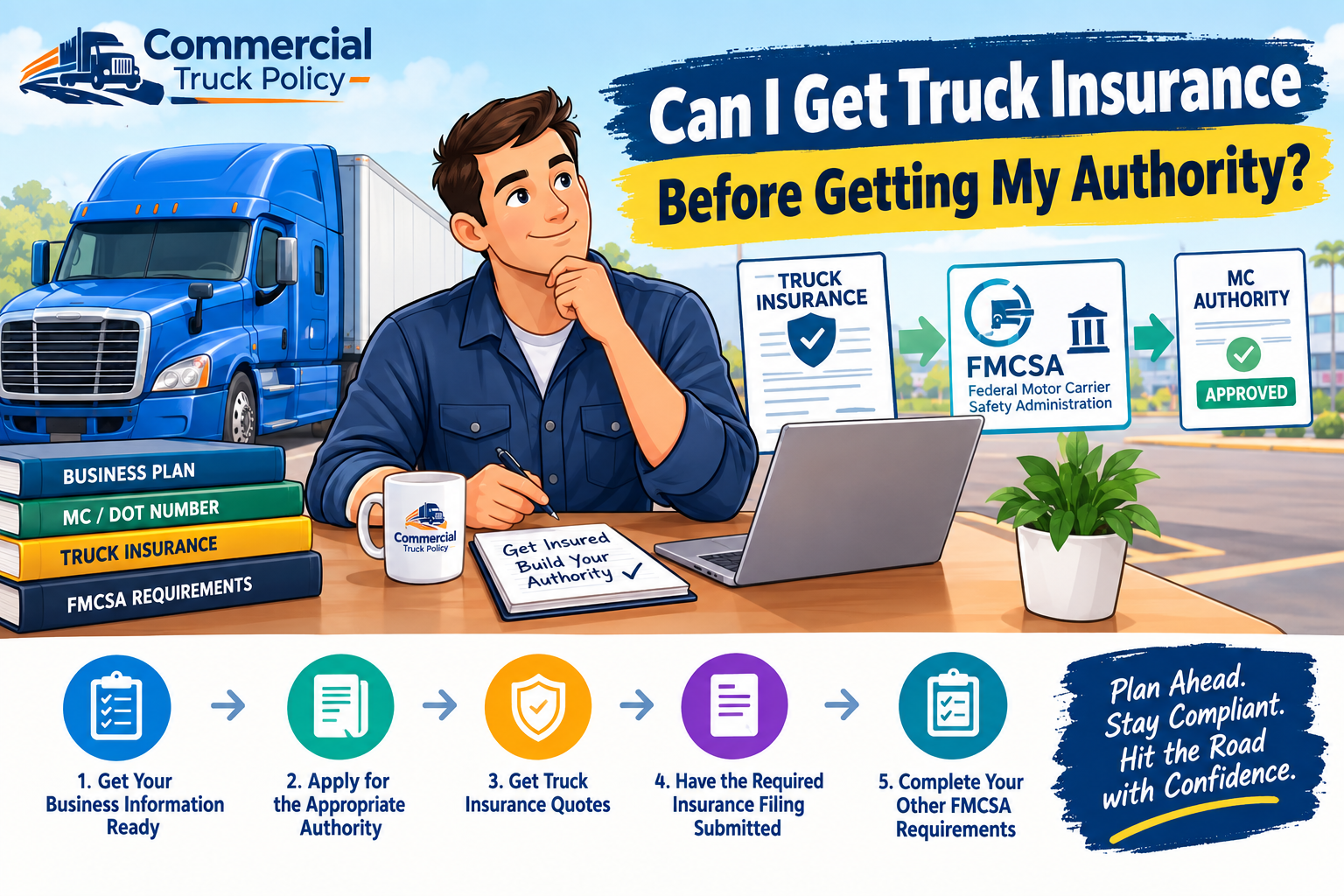
Can I Get Truck Insurance Before Getting My Authority?
Starting a trucking business involves several steps, and one of the most common questions for new truck owners is: Can I get truck insurance before getting my operating authority?
The short answer is yes, you can start the insurance process before your operating authority becomes active. In fact, insurance is an important part of getting your authority approved.
For many new motor carriers, the process can look confusing because you may receive an MC number before your authority is actually active. You then need to work with an insurance company or agent to make sure the required insurance filing is submitted to the Federal Motor Carrier Safety Administration (FMCSA).
Understanding how these steps fit together can help prevent unnecessary delays.
What Is Operating Authority?
Operating authority is the federal registration that allows certain motor carriers to transport regulated freight for compensation in interstate commerce.
FMCSA explains that companies transporting federally regulated commodities owned by others, for compensation in interstate commerce, generally need operating authority in addition to a USDOT number.
Operating authority is commonly associated with an MC number, although the exact type of authority depends on the business and the transportation services it provides.
Not every trucking operation needs operating authority. For example, some private carriers and certain carriers transporting exempt commodities may not need interstate operating authority.
That is why it is important to determine your authority requirements before purchasing a policy.
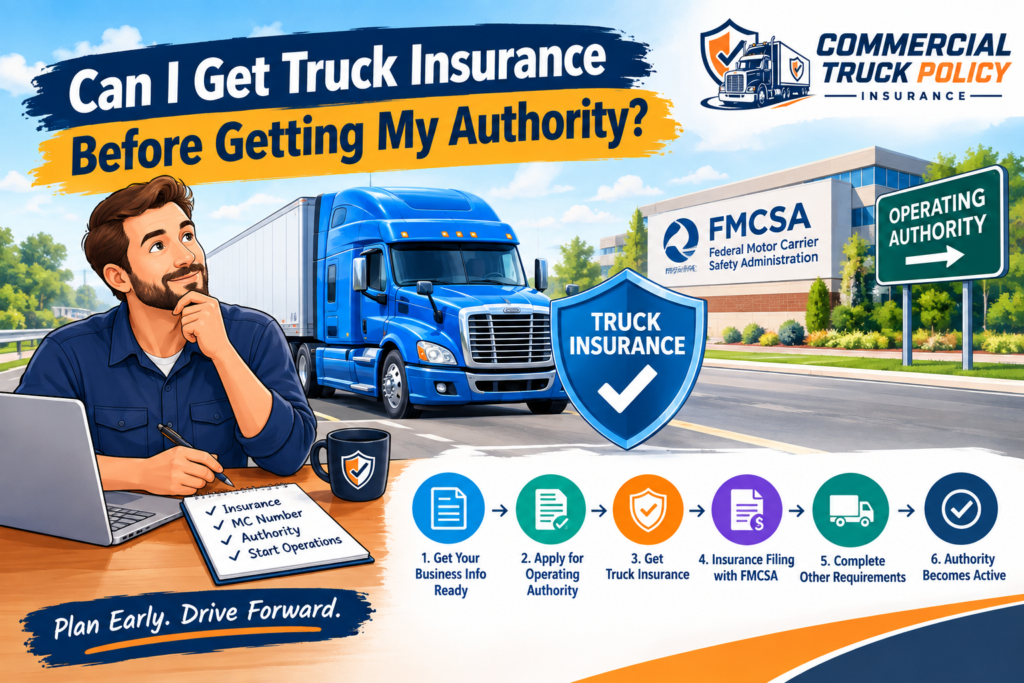
Can You Buy Truck Insurance Before Your Authority Is Active?
Yes.
You do not have to wait until your operating authority is fully active before contacting an insurance company.
In fact, FMCSA says that after an applicant receives its MC or FF number, the insurance step can begin and does not depend on completion of the other steps in the authority process.
Your insurance company can prepare the appropriate policy and, when required, file the necessary insurance forms with FMCSA.
This is important because FMCSA generally will not grant operating authority until the required financial responsibility/insurance filing is on file.
So the process is not simply:
Get authority → Buy insurance
It is often closer to:
Apply for authority → Receive MC number → Arrange insurance → Insurance company files required forms → Complete other requirements → Authority becomes active
Why Should You Start Insurance Early?
Starting the insurance process early can make your authority application smoother.
A new trucking company may need time to provide information to the insurance agent, receive quotes, select a policy, complete underwriting and have the insurance filing submitted.
If you wait until the last minute, an issue with your insurance information could delay the activation of your authority.
FMCSA specifically advises new entities to contact their financial responsibility provider for the required filing after obtaining their designated docket number.
What Insurance Do You Need?
The insurance requirement depends on several factors, including:
- Type of operating authority
- Type of carrier
- Vehicle type
- Cargo being transported
- Whether the operation involves household goods
- Whether hazardous materials are involved
For example, FMCSA’s current insurance filing chart lists different minimum requirements depending on the type of operation and vehicle. For-hire property carriers with vehicles having a GVWR of 10,001 pounds or more generally have a $750,000 BIPD requirement under the federal requirements shown by FMCSA. Certain hazardous-material operations have higher limits.
That does not mean every trucking business should simply purchase a $750,000 policy.
Your actual insurance needs can be affected by the type of freight you haul, contracts with brokers or shippers, state requirements and other factors.
Does Buying Insurance Make Your Authority Active?
No.
This is an important distinction.
Getting a commercial truck insurance policy does not automatically make your operating authority active.
The insurance company generally needs to file the required evidence of financial responsibility with FMCSA. FMCSA states that it will not grant operating authority until the required minimum financial responsibility is on file.
You also need to complete other applicable requirements, including the BOC-3 process-agent filing.
FMCSA’s guidance explains that proof of insurance and the BOC-3 filing are part of the requirements that must be satisfied before operating authority is granted.
What Is the Difference Between an Insurance Policy and an FMCSA Filing?
This can be confusing for new trucking companies.
You may purchase a commercial truck insurance policy from an insurance company, but FMCSA also needs the appropriate financial-responsibility filing.
The insurance company or authorized financial-responsibility filer handles the applicable filing with FMCSA. FMCSA’s registration guidance explains that public liability insurance forms such as BMC-91 or BMC-91X are submitted electronically by a registered filer.
So, simply having an insurance certificate in your email does not necessarily mean FMCSA has received the required filing.
Always verify that the required filing has been submitted and accepted.
What Should a New Trucking Company Do First?
If you are starting a new trucking company, a practical approach is to work through the process in an organized order.
1. Get Your Business Information Ready
Before requesting insurance quotes, make sure your business information is accurate.
This can include:
- Legal business name
- Business address
- USDOT number
- MC number, if applicable
- Type of operation
- Truck information
- Driver information
- Cargo or commodity
- Operating radius
- States of operation
Keeping this information consistent is important.
FMCSA warns that differences between business information used in registration and information submitted for operating authority can cause delays.
2. Apply for the Appropriate Authority
If your business requires interstate operating authority, submit the appropriate application through FMCSA.
Do not assume that every trucking company needs the same authority.
The type of operation determines which authority and insurance requirements may apply.
3. Get Truck Insurance Quotes
Once you have the necessary business and authority information, contact commercial truck insurance agents or companies.
Compare more than just the premium.
Look at:
- Coverage limits
- Deductible
- Physical damage coverage
- Cargo coverage when applicable
- Additional coverage options
- Policy exclusions
- Insurer financial strength
- Claims service
- Broker or shipper requirements
The cheapest quote is not always the best option for a trucking business.
4. Have the Required Insurance Filing Submitted
After selecting your insurance, your insurance provider or authorized filer can submit the required filing to FMCSA.
This step is particularly important because FMCSA requires the applicable financial responsibility to be on file before granting operating authority.
5. Complete Your Other Requirements
Insurance is only one part of the process.
Depending on your operation, you may also need a BOC-3 filing and other FMCSA requirements.
Do not start hauling regulated interstate freight simply because you have purchased insurance or received an MC number.
Can I Drive My Truck Before My Authority Is Active?
Having insurance does not automatically mean you are authorized to operate as a for-hire interstate motor carrier.
Your authority must be active when your operation requires operating authority.
FMCSA’s registration information states that companies should begin operations only after the required authority has been issued and the applicable requirements have been satisfied.
Therefore, new carriers should check their FMCSA status before beginning operations.
What If My Insurance Is Not Filed With FMCSA?
If the required insurance filing is not submitted within the applicable timeframe, your authority application can face problems.
FMCSA states that failure to provide required proof of insurance and the BOC-3 filing can result in dismissal of an operating authority application.
This is one reason new carriers should stay in communication with their insurance provider instead of assuming the filing has already been completed.
Final Thoughts
Yes, you can get truck insurance before your operating authority becomes active.
Actually, arranging insurance is an important part of the authority process for many new interstate motor carriers. After obtaining the applicable MC or other docket number, a carrier can work with its insurance provider to arrange the required coverage and filing.
The key is to understand that buying an insurance policy and having active operating authority are two different things.
Before starting your trucking operation, make sure your insurance filing, BOC-3 and other applicable FMCSA requirements have been completed and your authority is active.
Note: FMCSA requirements can vary based on the type of carrier, cargo, vehicle and authority. This article is for general educational purposes and should not be treated as legal or insurance advice. Always verify current requirements with FMCSA and a qualified insurance professional before beginning operations.
What Insurance Do I Need for a New MC Number?
What Happens If My Truck Insurance Policy Is Cancelled?
Fleet Insurance vs Individual Truck Insurance: Which Is Better?