
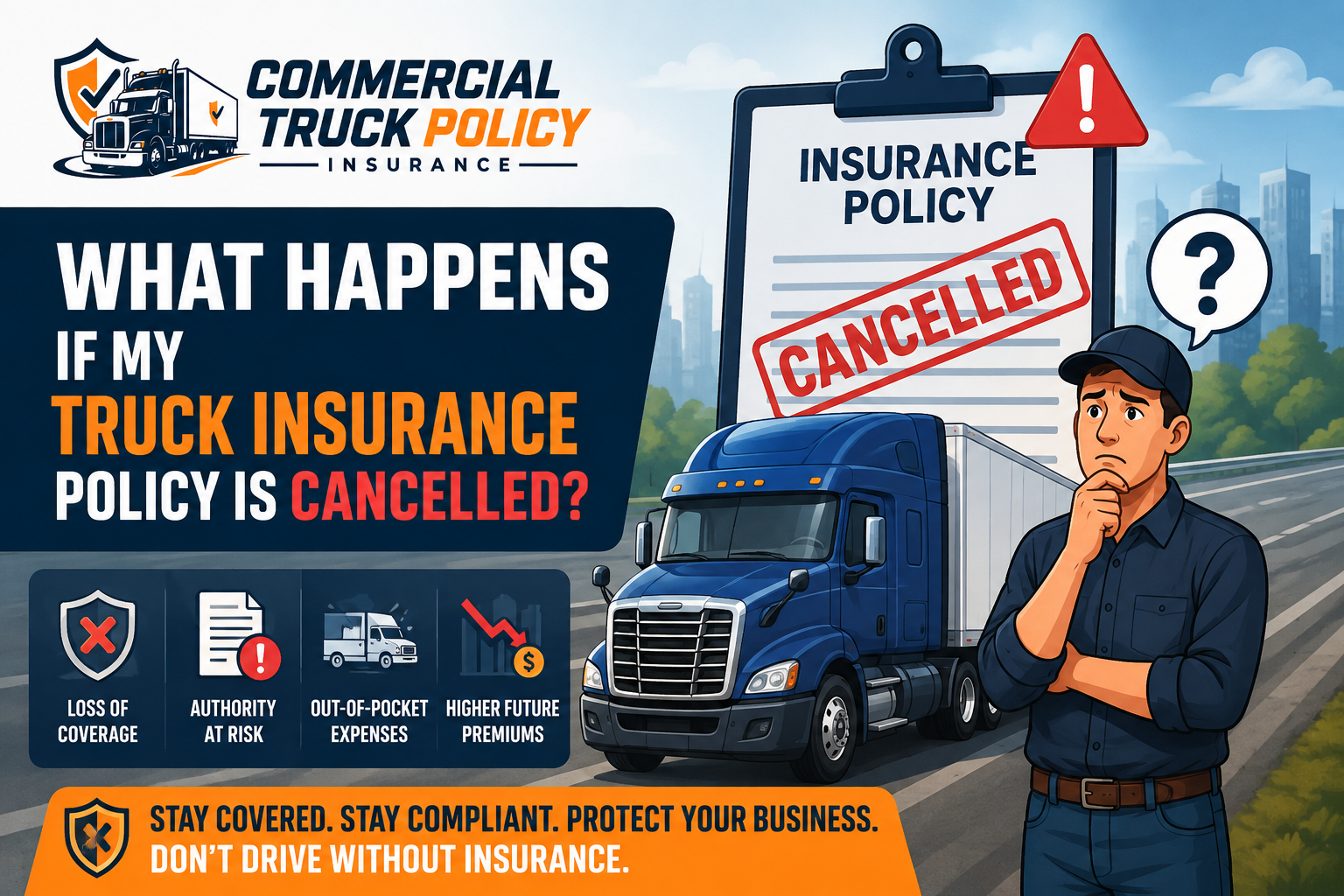
What Happens If My Truck Insurance Policy Is Cancelled?
Commercial truck insurance is one of the most important requirements for truck owners and trucking companies. Whether you operate as an owner-operator or manage a trucking company, keeping your insurance policy active is essential for protecting your business.
But what happens if your commercial truck insurance policy is cancelled?
Many truckers only discover the seriousness of a cancelled policy when they receive a cancellation notice. Depending on the reason and your operating authority, a cancellation can affect your ability to legally operate, your contracts, your DOT compliance, and even the future cost of your insurance.
In this guide, we explain what can happen after a truck insurance policy is cancelled and what steps you should take to avoid unnecessary problems.
What Does It Mean When a Truck Insurance Policy Is Cancelled?
A cancelled insurance policy means that your insurance coverage is no longer active.
After the cancellation becomes effective, your insurance company generally no longer provides coverage for accidents or losses that occur after the policy has ended.
This can be a serious problem for commercial truck drivers because insurance is often required to legally operate and may also be required by:
- Federal or state regulations
- Brokers
- Shippers
- Freight contracts
- Leasing companies
- Lenders
The exact consequences depend on your type of operation and the coverage that was cancelled.
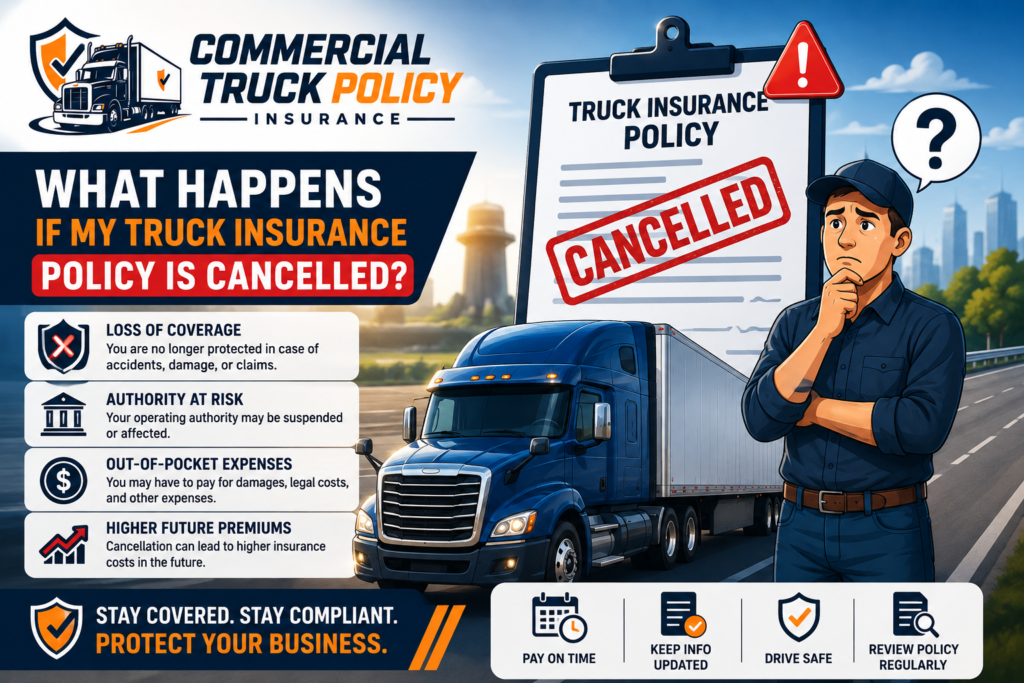
Common Reasons Why Truck Insurance Policies Are Cancelled
Commercial truck insurance policies can be cancelled for several reasons. Some of the most common include:
1. Non-Payment of Premium
One of the most common reasons for cancellation is missing an insurance payment.
Commercial truck insurance can be expensive, especially for new trucking companies. If a payment is missed and the issue is not resolved during the required notice period, the insurance company may cancel the policy.
If you are having financial difficulties, it is often better to contact your insurance agent before missing multiple payments.
2. Incorrect or Missing Information
Insurance companies rely on the information provided when issuing a policy.
Problems may occur if important information was incorrect or incomplete, such as:
- Driver information
- Accident history
- Truck information
- Vehicle usage
- Operating radius
- Cargo type
- Business details
If the insurance company discovers information that significantly affects the policy, they may review the coverage and take action according to the policy terms.
3. Poor Driving Record or Multiple Claims
A trucking company with multiple accidents, serious violations, or frequent insurance claims may be considered a higher risk.
Insurance companies regularly review risk. A poor loss history can sometimes result in increased premiums, non-renewal, or difficulty obtaining coverage in the future.
This is why safe driving and proper driver management are important for every trucking business.
4. Changes in Your Trucking Business
Changes in your operation can affect your insurance requirements.
For example:
- Adding new trucks
- Hiring additional drivers
- Changing the type of cargo
- Expanding into new states
- Increasing your operating radius
Always inform your insurance provider or agent when your business changes. Operating outside the information listed on your policy may create serious problems.
5. Policy Cancellation Requested by the Insured
Sometimes the trucking company itself requests cancellation.
For example, you may decide to:
- Sell your truck
- Stop operating temporarily
- Change insurance companies
- Close your trucking business
However, you should never cancel your existing policy before confirming that your replacement coverage is active if you plan to continue operating.
What Happens After Your Truck Insurance Is Cancelled?
The consequences of cancellation can vary, but the following problems may occur.
1. You May Have a Gap in Insurance Coverage
A cancelled policy can create a lapse in coverage.
If your truck is involved in an accident after your policy has ended, you may have to pay for damages and legal expenses yourself.
Commercial trucking accidents can involve significant costs. Depending on the situation, expenses may include:
- Vehicle damage
- Property damage
- Cargo losses
- Medical expenses
- Legal costs
- Business interruption
This is one of the biggest reasons why truckers should avoid operating without active insurance.
2. Your Operating Authority May Be Affected
For interstate trucking operations, active insurance filings may be required to maintain operating authority.
If required insurance coverage is cancelled and a replacement policy is not filed on time, your authority may be affected.
You should not assume that you can continue operating normally after receiving an insurance cancellation notice.
If you operate under federal authority, contact your insurance provider and review your status with the appropriate regulatory requirements.
3. You May Lose Loads or Business Contracts
Many freight brokers and shippers require active insurance before working with a carrier.
If your insurance is cancelled, you may no longer meet the requirements of certain contracts.
This could result in:
- Lost loads
- Cancelled contracts
- Delayed operations
- Reduced business opportunities
For a small trucking company, even a short interruption can create financial pressure.
4. Your Truck May Not Be Properly Protected
If Physical Damage coverage is cancelled, damage to your own truck may no longer be covered under that policy.
For example, if your truck is damaged in:
- A collision
- Theft
- Fire
- Vandalism
- Certain weather-related events
you may have to pay for repairs or replacement yourself, depending on your coverage situation.
Remember that Auto Liability and Physical Damage are different coverages. Liability generally protects against covered third-party claims, while Physical Damage coverage helps protect your own insured vehicle under the terms of the policy.
5. Cargo May No Longer Be Protected
If your Motor Truck Cargo coverage is cancelled, cargo-related losses may no longer be covered under your previous policy.
Cargo claims can be expensive, especially when hauling high-value freight.
Many brokers and shippers require carriers to maintain a specific amount of cargo insurance.
Without proper coverage, you may lose access to certain loads or face financial responsibility for a covered loss that occurs while uninsured.
6. Getting New Insurance May Become More Expensive
A previous cancellation or lapse in coverage may make it more difficult to find affordable insurance.
Insurance companies may review your insurance history when determining rates and eligibility.
A clean and continuous insurance history can help demonstrate that your business is stable and responsible.
That is why it is important to avoid unnecessary gaps in coverage whenever possible.
What Should You Do If You Receive a Cancellation Notice?
Do not ignore a cancellation notice.
Take action as soon as possible.
Step 1: Read the Notice Carefully
Check the following information:
- Reason for cancellation
- Effective cancellation date
- Amount due, if applicable
- Policy number
- Coverage affected
- Contact information for your insurance company
The cancellation notice may provide important information about how much time you have before coverage ends.
Step 2: Contact Your Insurance Agent or Company Immediately
If the cancellation is related to a missed payment or an error, contact your insurance agent immediately.
Ask:
- Why is my policy being cancelled?
- Can the issue be corrected?
- Is reinstatement available?
- What payment or documentation is required?
- Will there be a lapse in coverage?
The faster you act, the more options you may have.
Step 3: Do Not Drive Without Confirming Active Coverage
Never assume your insurance is active.
Before operating your commercial truck, confirm that you have the required active coverage.
If your policy has been cancelled, arrange replacement coverage before continuing operations whenever insurance is required.
Step 4: Get Quotes From Other Truck Insurance Providers
If your current policy cannot be reinstated, start comparing other commercial truck insurance options.
When requesting quotes, be prepared to provide information about:
- Your trucking business
- Truck details
- Driver information
- DOT or operating information
- Cargo type
- Previous insurance history
- Claims history
Be honest when providing information. Incorrect information can create problems later.
Step 5: Confirm Your New Policy Is Active
Do not rely only on a quote or verbal confirmation.
Before cancelling an old policy or returning to operation, confirm that your new insurance policy is active.
You should also verify that all required documents and filings have been properly completed for your specific operation.
Can You Reinstate a Cancelled Truck Insurance Policy?
In some situations, an insurance company may allow a policy to be reinstated.
However, reinstatement is not always available.
It may depend on:
- The reason for cancellation
- How much time has passed
- Your payment history
- Your claims history
- Insurance company rules
If your policy was cancelled because of non-payment, contact the insurance company as soon as possible.
Waiting too long may increase the chance of a coverage gap.
How to Avoid Truck Insurance Cancellation
The best solution is prevention.
Here are some simple ways to reduce the risk of cancellation.
Pay Your Premium on Time
Set reminders or use automatic payments if available.
Late payments can create unnecessary problems and may affect your business operations.
Keep Your Insurance Company Updated
Inform your insurance provider when you:
- Add a truck
- Remove a truck
- Hire a new driver
- Change your business address
- Change your operating area
- Start hauling different cargo
Keeping your policy information accurate can help prevent unexpected issues.
Maintain a Safe Driving Record
Safe driving can help protect both your business and your insurance history.
Encourage drivers to:
- Follow traffic laws
- Avoid distracted driving
- Perform regular vehicle inspections
- Follow Hours of Service requirements
- Report accidents promptly
A strong safety culture can benefit your trucking company in the long term.
Review Your Insurance Policy Regularly
Do not wait until an accident happens to understand your insurance.
Review your policy at least once a year or whenever your business changes.
Make sure you understand:
- Coverage limits
- Deductibles
- Exclusions
- Payment schedule
- Policy expiration date
What If My Truck Insurance Policy Is Not Renewed?
Cancellation and non-renewal are not always the same thing.
A cancellation usually means the policy ends before its scheduled expiration date.
Non-renewal generally means the insurance company does not plan to continue the policy after the current policy period ends.
If you receive a non-renewal notice, you should start looking for replacement insurance before your current policy expires.
This can help you avoid a gap in coverage.
Final Thoughts
A cancelled truck insurance policy can create serious problems for an owner-operator or trucking company.
You may face a gap in coverage, difficulty operating legally, lost business opportunities, and higher insurance costs in the future.
The most important thing is to act quickly.
If you receive a cancellation notice, contact your insurance provider immediately, understand the reason for cancellation, and explore your available options.
Most importantly, do not operate your truck without confirming that you have the insurance coverage required for your business.
Maintaining continuous coverage, paying premiums on time, keeping accurate information, and reviewing your policy regularly can help protect your trucking business from unnecessary interruptions.
Disclaimer: This article is for general educational and informational purposes only and should not be considered legal, insurance, or financial advice. Insurance requirements and regulations may vary based on your location, authority, business operations, and policy terms. Always review your insurance policy and consult a licensed insurance professional for advice related to your specific situation.
What Is Commercial Truck Insurance Coverage?
PIP and Medical Payments for Commercial Truck Insurance
Owned, Non-Owned, Trailer Interchange & Rental Trailer Insurance