
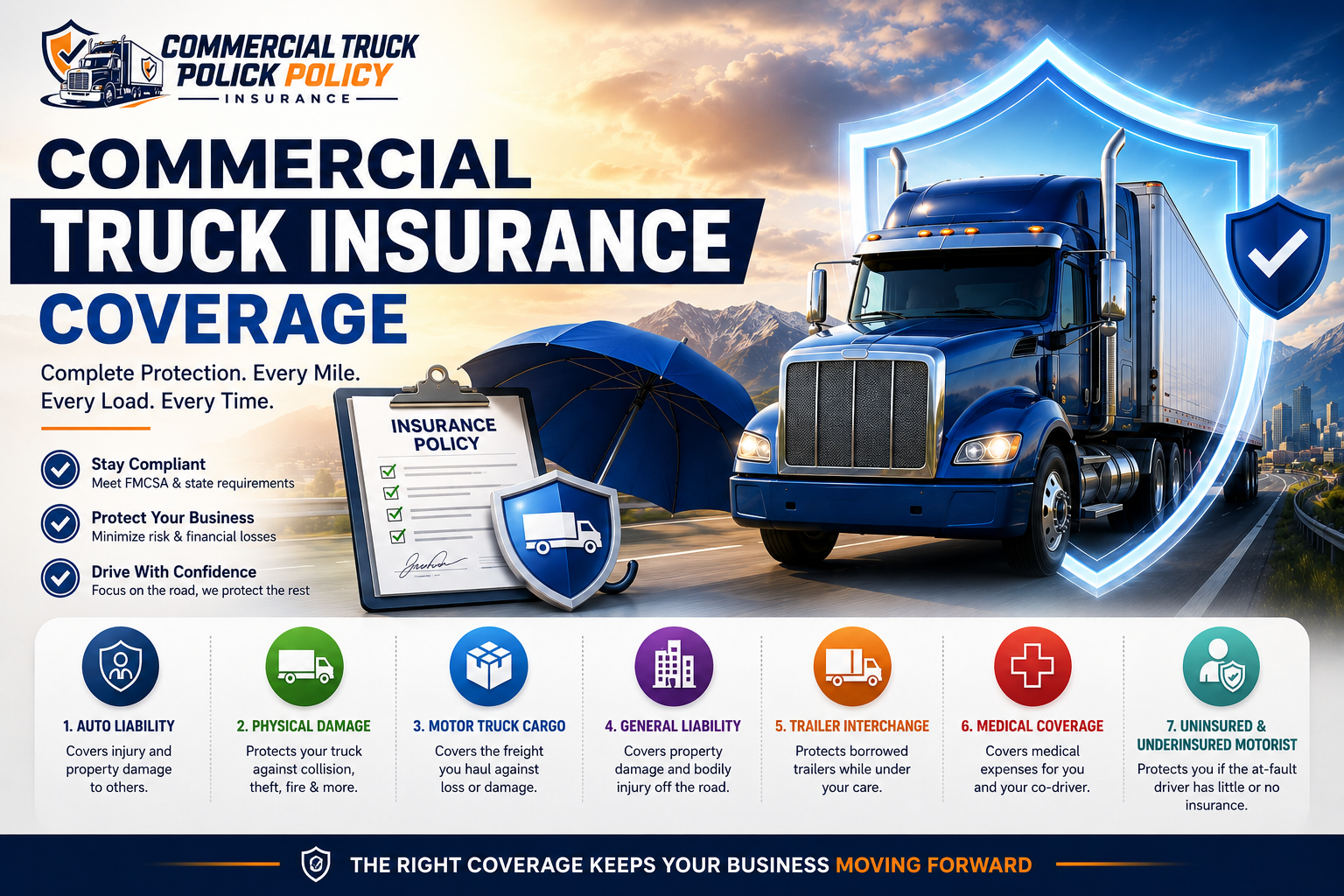
Commercial truck insurance is a specialized type of insurance designed for semi-trucks, tractor-trailers, and other commercial vehicles that transport freight over long distances. In the United States, commercial trucking businesses are generally required to carry certain types of insurance to operate legally.
The primary purpose of commercial truck insurance is to protect truck owners, drivers, and businesses from financial losses caused by accidents, property damage, cargo loss, lawsuits, or other unexpected events. Having coverage from a reputable A-rated or A+ rated insurance company can also help ensure faster claims processing and reliable customer support when an accident occurs.
Why Is Commercial Truck Insurance Important?
Commercial trucking involves significant risks every day. Accidents can happen because of bad weather, heavy traffic, road hazards, or mechanical failures. Without proper insurance, a single accident could result in thousands—or even millions—of dollars in damages.
Commercial truck insurance helps:
- Protect your trucking business from financial loss.
- Cover damages to other people and their property.
- Pay for repairs to your truck.
- Protect the cargo you are hauling.
- Meet federal and state insurance requirements.
- Build trust with brokers and shippers.
- Keep your business running after an accident.
Types of Commercial Truck Insurance Coverage
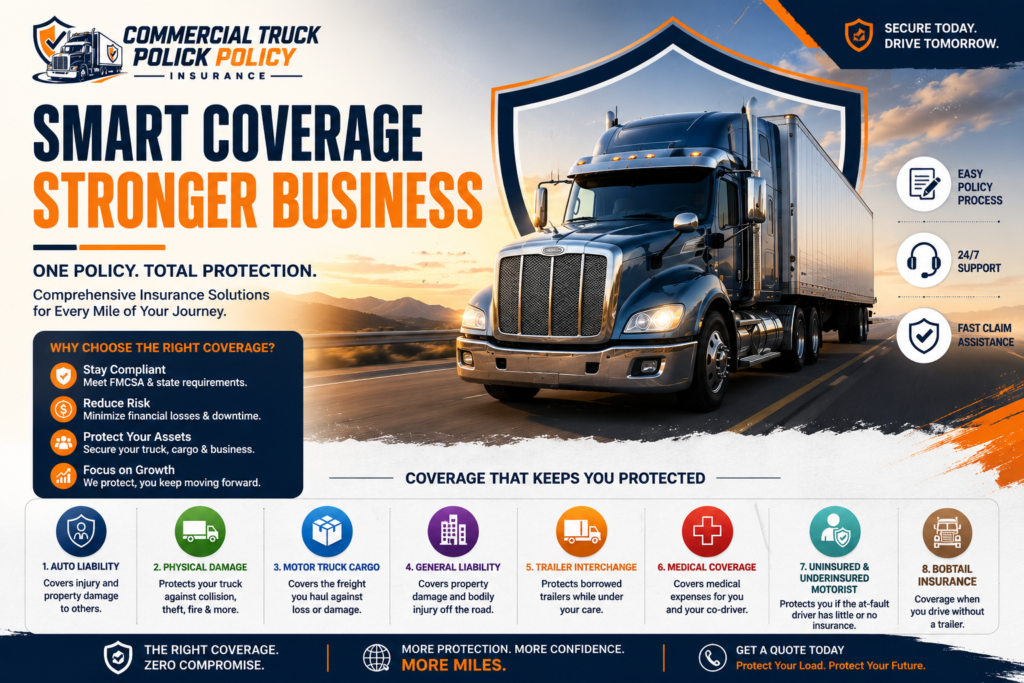
Commercial truck insurance consists of several different coverages. Each one protects a different part of your trucking business.
1. Auto Liability Insurance (Primary Liability)
Auto Liability Insurance is the most important and legally required coverage for most commercial trucking operations. It protects you when you are responsible for causing an accident that results in injury or property damage to someone else.
This is considered third-party insurance, meaning it pays for damages suffered by other people—not your own truck.
What Auto Liability Covers
- Bodily injury to other people
- Damage to another person’s vehicle
- Damage to buildings, fences, or other property
- Legal defense costs in covered claims
Without Auto Liability Insurance, most truckers cannot legally operate or haul freight.
2. Physical Damage Coverage
Physical Damage Coverage protects your own truck against damage caused by accidents or other covered events.
Unlike Liability Insurance, this coverage pays for repairs or replacement of your insured vehicle.
Examples
- Collision with another vehicle
- Hitting a tree or pole
- Truck rollover
- Fire damage
- Theft
- Vandalism
- Storm or weather-related damage
Whether you own a new or used truck, Physical Damage Coverage is highly recommended because repair costs for commercial trucks can be extremely expensive.
3. Motor Truck Cargo Insurance
Motor Truck Cargo Insurance protects the freight or cargo you are transporting.
If the cargo is damaged, destroyed, or lost during transit due to a covered event, this policy helps compensate the cargo owner.
Common Covered Situations
- Cargo damaged in an accident
- Cargo stolen
- Fire damage
- Overturned trailer causing cargo damage
Cargo policies usually have different coverage limits, such as:
- $100,000 Cargo Coverage
- $250,000 Cargo Coverage
- Higher limits depending on broker or shipper requirements
Many freight brokers require truckers to carry Cargo Insurance before assigning loads.
The Three Essential Coverages Every Trucker Needs
To haul freight legally and meet most broker requirements, every trucking business should have:
- Auto Liability Insurance
- Physical Damage Coverage
- Motor Truck Cargo Insurance
These three coverages form the foundation of most commercial truck insurance policies.
4. General Liability Insurance
General Liability Insurance protects your business from property damage or bodily injury that occurs outside of operating the truck on public roads.
For example, while backing into a loading dock, you may accidentally damage a warehouse door, loading equipment, or another part of the customer’s property.
General Liability May Cover
- Damage to warehouse property
- Customer property damage
- Bodily injury occurring during business operations
- Legal expenses
Some brokers and warehouses require General Liability Insurance before allowing truckers to pick up loads.
5. Trailer Interchange Coverage
Trailer Interchange Coverage protects trailers that you do not own but are using under a trailer interchange or lease agreement.
If you borrow or lease another company’s trailer and it becomes damaged while in your possession, this coverage helps pay for repairs or replacement.
It May Cover
- Collision damage
- Theft
- Fire
- Trailer rollover
- Vandalism
Important: This coverage protects the trailer itself—not the cargo inside it.
6. Medical Payments Coverage
Medical Payments Coverage helps pay medical expenses for the driver and passengers injured in a covered accident, regardless of who caused the accident.
It May Cover
- Ambulance services
- Emergency room visits
- Hospital bills
- Doctor fees
- Surgery
- Prescription medications
- X-rays and diagnostic tests
This coverage can reduce out-of-pocket medical expenses after an accident.
7. Bobtail Insurance
Bobtail Insurance provides coverage when the truck is being operated without a trailer attached.
For example, after delivering a load, a driver may travel to another location without pulling a trailer. During this time, Bobtail Insurance helps provide protection if an accident occurs.
This coverage is especially useful for owner-operators working under a motor carrier.
8. Uninsured and Underinsured Motorist Coverage
Not every driver on the road has enough insurance—or any insurance at all.
Uninsured and Underinsured Motorist Coverage protects you if another driver causes an accident but:
- Has no insurance, or
- Does not have enough insurance to cover your damages.
Example
Suppose another driver causes an accident that results in $50,000 in damages to your truck.
- The at-fault driver only carries $30,000 in insurance.
- Their insurer pays $30,000.
- Your Uninsured/Underinsured Motorist Coverage may help pay the remaining $20,000, depending on your policy limits.
This coverage provides valuable financial protection in situations where the other driver’s insurance is insufficient.
Final Thoughts
Commercial truck insurance is much more than a legal requirement—it is one of the most important investments for any trucking business. The right insurance policy protects your truck, cargo, business, and financial future.
While every trucking operation is different, Auto Liability, Physical Damage, and Motor Truck Cargo Insurance are the three core coverages that most truckers need before hauling freight. Additional coverages such as General Liability, Trailer Interchange, Medical Payments, Bobtail Insurance, and Uninsured/Underinsured Motorist Coverage can provide extra protection based on your business needs and broker requirements.
Before purchasing a policy, compare quotes from reputable insurance providers, understand your coverage limits, and choose the protection that best fits your trucking operation. The right insurance can help keep your business moving, even when unexpected accidents happen.
What Is Commercial Truck Insurance? A Complete Beginner’s Guide