Owned, Non-Owned, Trailer Interchange & Rental Trailer Insurance: Complete Guide (2026)
In the commercial trucking industry, power-only arrangements, trailer drops, and equipment sharing are everyday realities. An owner-operator or fleet manager might pull a trailer owned by their own company on Monday, a rented dry van on Wednesday, and a customer’s non-owned chassis on Friday.
However, a major point of confusion for many carriers is assuming that if the tractor is insured, any trailer hooked to it is automatically covered.
This assumption can result in costly claim denials.
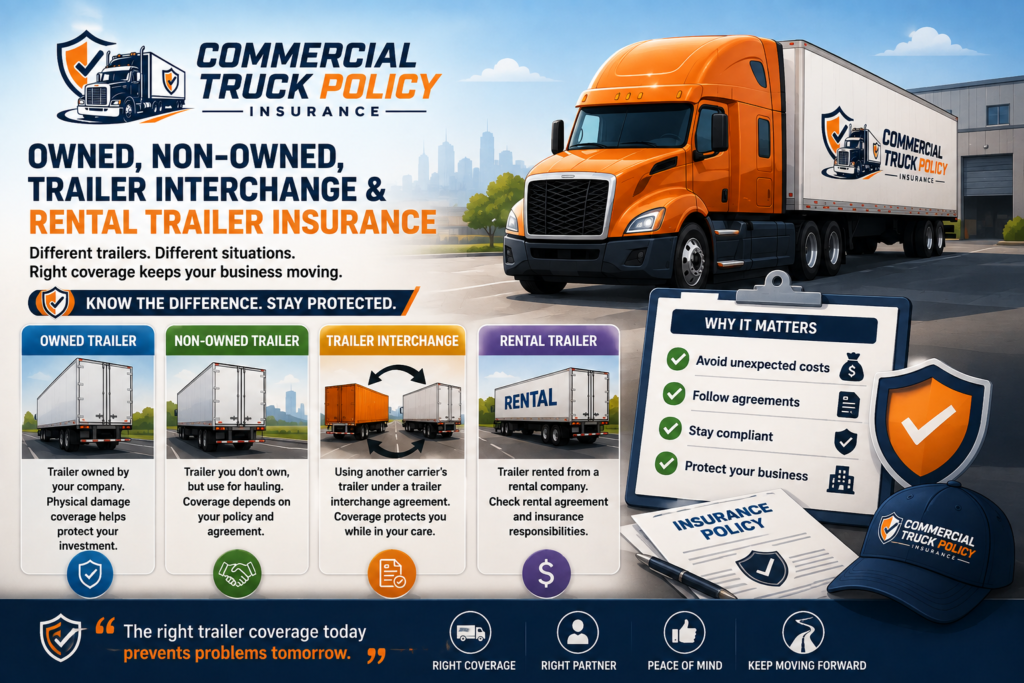
Owned trailers, non-owned trailers, trailer interchange equipment, and rental trailers are completely distinct insurance categories. Each arrangement carries different contractual obligations, physical damage liabilities, and policy endorsements.
Here is a comprehensive breakdown of how these four trailer types differ, what coverages are required, and how to protect your business from unpaid equipment claims.
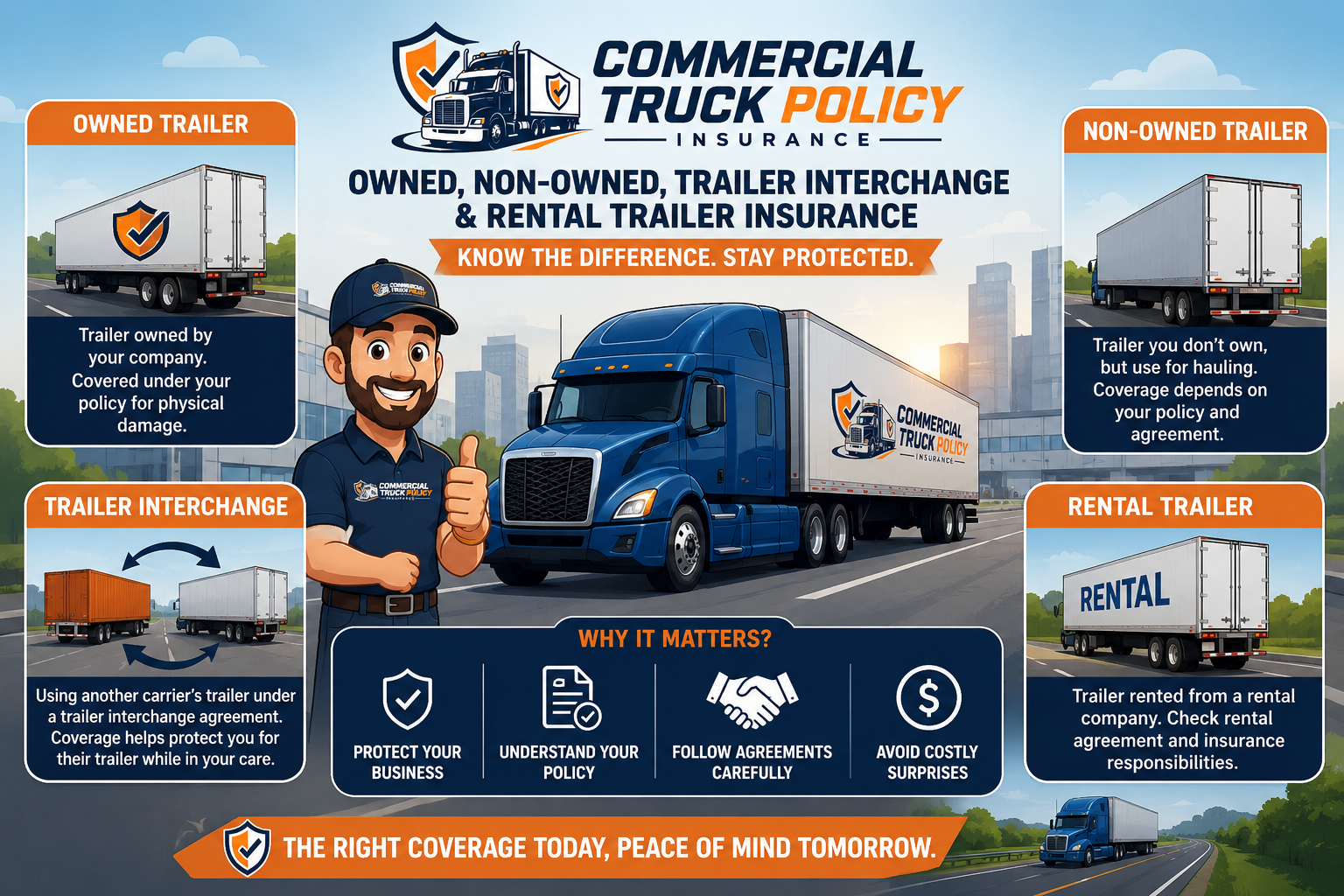
Quick Comparison: The 4 Types of Commercial Trailer Coverage
| Coverage Category | Who Owns the Trailer? | Contract / Agreement Required? | Primary Insurance Needed |
| Owned Trailer | Your Company | No (Titled to your business) | Scheduled Physical Damage (Collision & Comp) |
| Non-Owned Trailer | Customer / Shipper | Varies (Off-written agreement) | Non-Owned Trailer Physical Damage |
| Trailer Interchange | Another Motor Carrier | Yes (Written Interchange Agreement) | Trailer Interchange Endorsement |
| Rental Trailer | Commercial Rental Co. | Yes (Commercial Lease / Rental Contract) | Hired Auto / Rental Physical Damage |
1. Owned Trailer Insurance
An owned trailer is any trailer that is titled, registered, or owned directly by your trucking company.
How Coverage Works:
- Primary Liability: When an owned trailer is hooked to your insured tractor, your Primary Auto Liability policy extends to cover third-party property damage or injuries caused by the trailer while in motion.
- Physical Damage: To cover physical damage to the trailer itself (from a jackknife, collision, theft, or fire), the trailer must be specifically listed (scheduled) on your policy with its assigned VIN and Stated Actual Cash Value (ACV).
⚠️ Key Takeaway: If an owned trailer is unhooked and parked at a yard without a scheduled physical damage policy, any storm, fire, or theft damage will come 100% out of your pocket.
2. Non-Owned Trailer Physical Damage Coverage
A non-owned trailer is a trailer that your business does not title or own, but takes custody of to haul freight. This frequently occurs when shippers or receivers require you to pull their specialized trailers (like a specific flatbed or reefer unit).
How Coverage Works:
- The Risk: Your primary auto liability policy covers road damage caused by the trailer to third parties, but it does not repair physical damage to the non-owned trailer itself if you overturn or crash it.
- The Solution: You need a Non-Owned Trailer Physical Damage Endorsement added to your policy. This extends comprehensive and collision protection to trailers in your possession that you do not own or lease on a long-term basis.
3. Trailer Interchange Insurance
Trailer Interchange Insurance is a highly specific coverage designed strictly for motor carriers operating under a written Trailer Interchange Agreement.
What Is a Trailer Interchange Agreement?
In power-only operations or equipment-swapping arrangements, two or more licensed motor carriers sign a legal contract to pass trailers back and forth to complete long-distance freight movements. Under this contract, the carrier currently pulling or storing the trailer assumes strict contractual liability for any physical loss or damage to that non-owned equipment.
Why Standard Non-Owned Coverage Isn’t Enough:
Standard non-owned trailer endorsements usually exclude losses covered under formal interchange agreements. Trailer Interchange Coverage is specifically underwritten to satisfy the indemnification clauses of an interchange contract.
- Common Industry Limit: $20,000 to $50,000 per trailer (with deductibles ranging from $1,000 to $2,500).
4. Rental Trailer Insurance
A rental trailer is an unowned unit obtained from a commercial equipment leasing entity (such as Ryder, Penske, or XTRA Lease) to cover peak seasonal volume or temporary equipment breakdowns.
Key Considerations Before Pulling a Rental Trailer:
- Rental Contract Terms: Commercial rental contracts hold your trucking company 100% financially responsible for any damage, loss of use, or diminution of value during the rental period.
- Hired Auto Physical Damage: Ensure your policy includes Hired Auto Physical Damage coverage. Do not assume your standard collision policy covers rental equipment without this endorsement.
- Loss of Use Clause: If a rented trailer is wrecked, the rental company will bill you for the daily rental fee for every day the unit is out of service being repaired. Check if your insurance covers “Loss of Use” expenses.
4 Common Errors That Lead to Denied Trailer Claims
- Assuming “Power-Only” Auto Liability Covers the Trailer: Primary Liability only pays for damage your rig causes to other vehicles. It pays zero dollars to fix the trailer hooked behind you.
- Failing to Update Stated Values: If you list an owned reefer trailer’s value at $30,000, but replace it with a new $75000 unit without notifying your broker, a total loss payout will be capped at the lower $30,000 limit.
- Confusing Trailer Interchange with Non-Owned Coverage: If a broker requires a formal Trailer Interchange Certificate and you only carry basic non-owned coverage, your claim will likely be rejected upon audit.
- Unattended / Unhooked Trailer Exclusions: Many non-owned and rental endorsements restrict coverage if a trailer is unhooked and left unattended in an un-gated or unmonitored lot.
Frequently Asked Questions (FAQs)
1. Does my tractor’s insurance cover a trailer when it is unhooked?
Your tractor’s Primary Auto Liability only covers a trailer while it is attached to the power unit. Once unhooked, an unattached trailer requires its own physical damage policy (or general liability coverage) to address property claims or damage while stationary.
2. How much does Trailer Interchange Insurance cost?
Adding Trailer Interchange coverage (typically with a $30,000 limit per trailer) generally adds between $100 and $350 per year to your commercial truck insurance policy.
3. What limit should I choose for non-owned or rental trailer coverage?
Select a limit based on the maximum replacement value of the trailers you intend to pull. For example, standard dry vans generally require $30,000 to $45,000 in coverage, whereas modern refrigerated (reefer) trailers or specialized step-decks may require $60,000 to $90,000+.
Final Thoughts
Managing trailer insurance requires looking beyond your primary tractor policy. Whether you own your fleet outright, participate in power-only interchange networks, or rent equipment during peak shipping seasons, aligning your insurance endorsements with your legal ownership status is essential.
Before taking possession of any trailer you do not own, verify the written contract, confirm your policy limits with your commercial transportation agent, and ensure your Certificate of Insurance accurately reflects the correct coverage type..
PIP and Medical Payments for Commercial Truck Insurance