
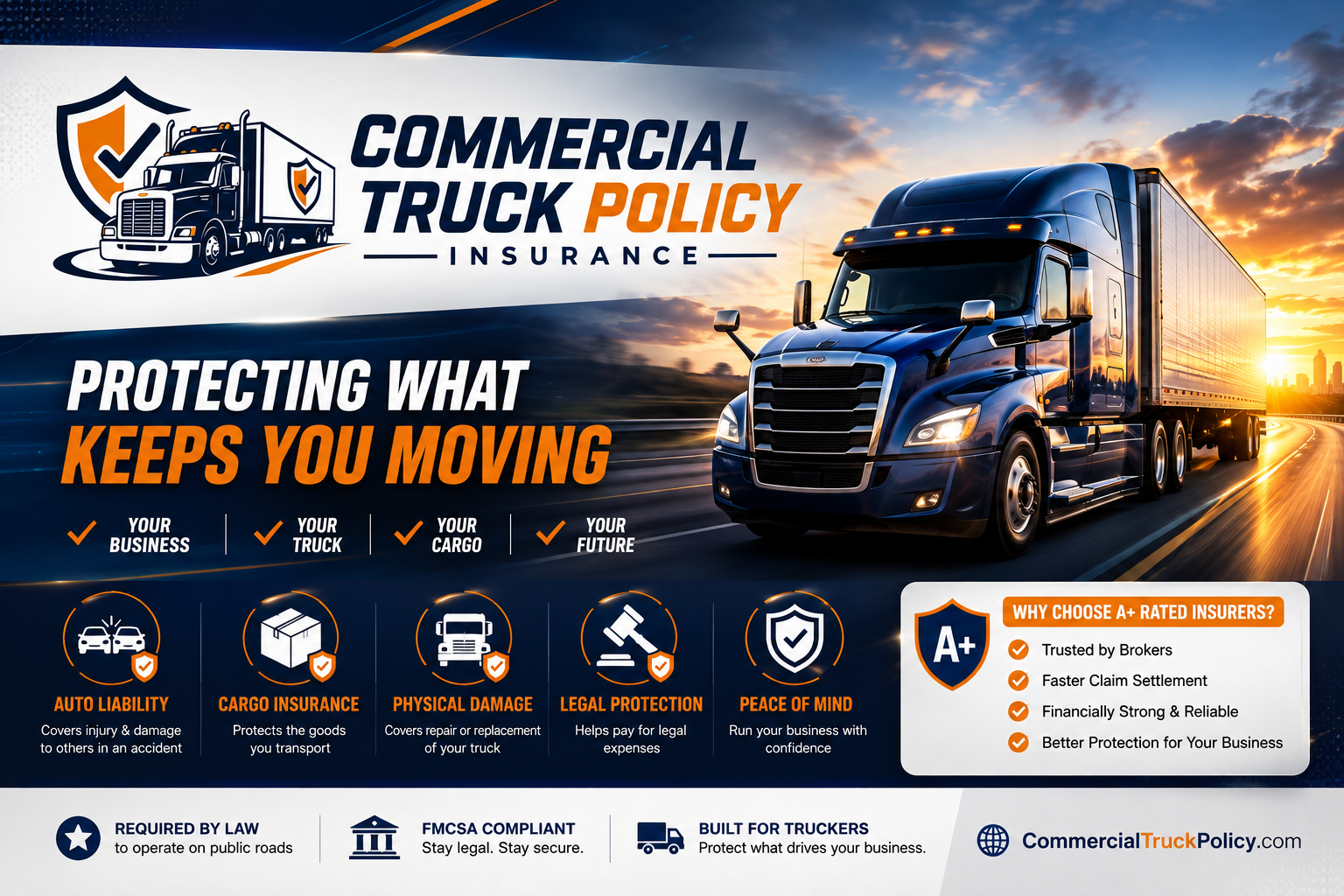
The transportation and logistics industry is one of the strongest pillars of any country’s economy. Every product we use—from groceries and electronics to construction materials and medical supplies—depends on trucks to reach its destination.
The United States has one of the world’s largest transportation and logistics networks. Millions of commercial trucks travel across the country every day, keeping businesses running and supporting economic growth. Because of this, trucking is a highly regulated industry, and one of the most important requirements for every truck owner or trucking company is commercial truck insurance.
If you are planning to start a trucking business or become an owner-operator in 2026, understanding commercial truck insurance is the first step toward running a legal and successful operation.
Why Is Commercial Truck Insurance Important?
Before you can legally operate a commercial truck in the United States, you must have the required insurance coverage.
In fact, for many new trucking companies, obtaining insurance comes before purchasing a truck. Most lenders, dealerships, and leasing companies require proof of insurance before they will finance or release a commercial vehicle.
If you have recently received your new DOT authority, one of your first responsibilities is finding a reliable commercial truck insurance provider.
Without proper insurance, you may not be able to:
- Register your trucking business
- Operate legally on public roads
- Secure freight loads from brokers
- Obtain financing for your truck
- Protect yourself from costly lawsuits and accidents
Commercial truck insurance is not simply a legal requirement—it is financial protection for your business.
What Does Commercial Truck Insurance Cover?
Commercial truck insurance is designed to protect truck owners, drivers, businesses, and the general public from financial losses caused by accidents, damage, or unexpected events.
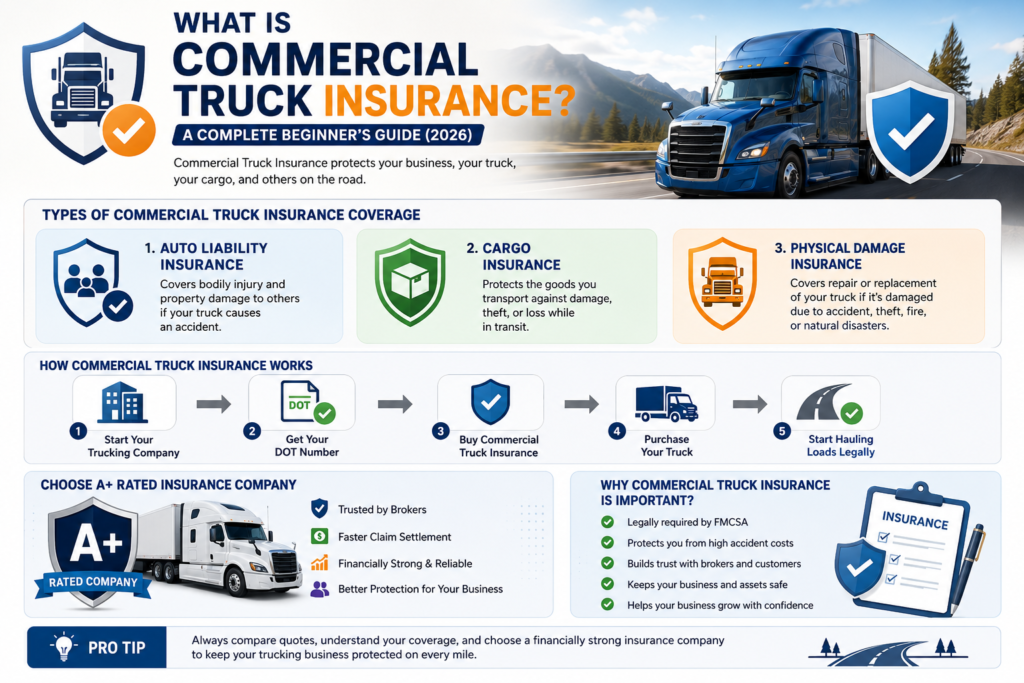
Commercial Truck Insurance Companies in USA
1. Auto Liability Insurance
Auto Liability Insurance is the most important coverage for every trucking company.
It is often referred to as the primary coverage because it is required by law before a truck can legally operate on public roads.
This policy protects you if your truck causes:
- Bodily injury to another person
- Property damage to another vehicle
- Damage to buildings or public property
- Legal expenses related to covered accidents
For example, if your truck is responsible for an accident, Auto Liability Insurance helps pay for the damages suffered by the third party.
Without this coverage, your trucking company may not legally operate.
2. Cargo Insurance
Your responsibility does not end with driving the truck—you are also responsible for the freight you transport.
Cargo Insurance protects the goods being carried if they are:
- Damaged
- Stolen
- Lost
- Destroyed in an accident
Many freight brokers require a minimum amount of cargo insurance before they will assign loads to a carrier.
Without adequate cargo coverage, your business opportunities may become limited.
3. Physical Damage Coverage
Physical Damage Insurance protects your own truck.
Unlike liability insurance, which pays for damage caused to others, Physical Damage Coverage helps repair or replace your truck if it is damaged by:
- Traffic accidents
- Fire
- Theft
- Vandalism
- Severe weather
- Falling objects
Considering the high cost of commercial trucks, this coverage can save trucking companies from significant financial losses.
Which Coverage Should You Buy First?
If you are purchasing your first commercial truck, Auto Liability Insurance should be your first priority.
This coverage is legally required and allows you to operate your truck on public highways.
Once your primary liability policy is in place, you should consider adding:
- Cargo Insurance
- Physical Damage Coverage
- General Liability Insurance
- Bobtail Insurance (if applicable)
- Occupational Accident Coverage
- Trailer Interchange Coverage
The right combination depends on your business model and the type of freight you haul.
Why Insurance Matters to Freight Brokers
Many new truck owners focus only on meeting legal requirements, but insurance also plays a major role in getting freight.
Freight brokers often review a carrier’s insurance before assigning loads.
Working with a reputable insurance company demonstrates professionalism and financial stability. It also gives brokers confidence that claims will be handled properly if an accident occurs.
Good insurance can improve your business reputation and help you secure better-paying loads.
Should You Choose an A+ Rated Insurance Company?
Yes.
Whenever possible, choose an insurance provider with a strong financial rating, such as an A+ rated company.
A financially strong insurer is generally more capable of:
- Paying claims efficiently
- Providing reliable customer service
- Maintaining long-term financial stability
- Building trust with freight brokers and lenders
Choosing insurance based only on the lowest premium can sometimes become expensive later if claim handling is poor.
Why Some Truckers Avoid RRG Insurance
Some trucking companies choose Risk Retention Group (RRG) insurance because it may offer lower premiums.
However, some truckers report challenges such as:
- Slower claims processing
- Limited acceptance by certain freight brokers
- Restrictions in specific situations
While RRG policies can be appropriate for some businesses, many experienced owner-operators prefer established commercial insurance companies with strong financial ratings and broader market acceptance.
Before purchasing any policy, carefully compare coverage, claim service, exclusions, and broker acceptance—not just the price.
Tips for Choosing the Right Commercial Truck Insurance
Before buying a policy, keep these tips in mind:
- Compare quotes from multiple insurance companies.
- Understand every coverage included in your policy.
- Check the insurer’s financial strength rating.
- Ask about deductibles and policy exclusions.
- Work with an experienced trucking insurance agent.
- Ensure your coverage meets FMCSA requirements.
- Choose a company known for fair and timely claims handling.
Final Thoughts
Commercial truck insurance is more than just a legal requirement—it’s the foundation of a successful trucking business.
Whether you’re starting a new trucking company, activating your DOT authority, or buying your first commercial truck, having the right insurance protects your business, your equipment, your cargo, and your financial future.
In 2026, investing in the right insurance policy is one of the smartest decisions any truck owner can make. Choose a trusted, financially strong insurance provider, understand your coverage, and make sure your policy supports both legal compliance and long-term business growth.
A well-protected trucking business is a business built for success.